
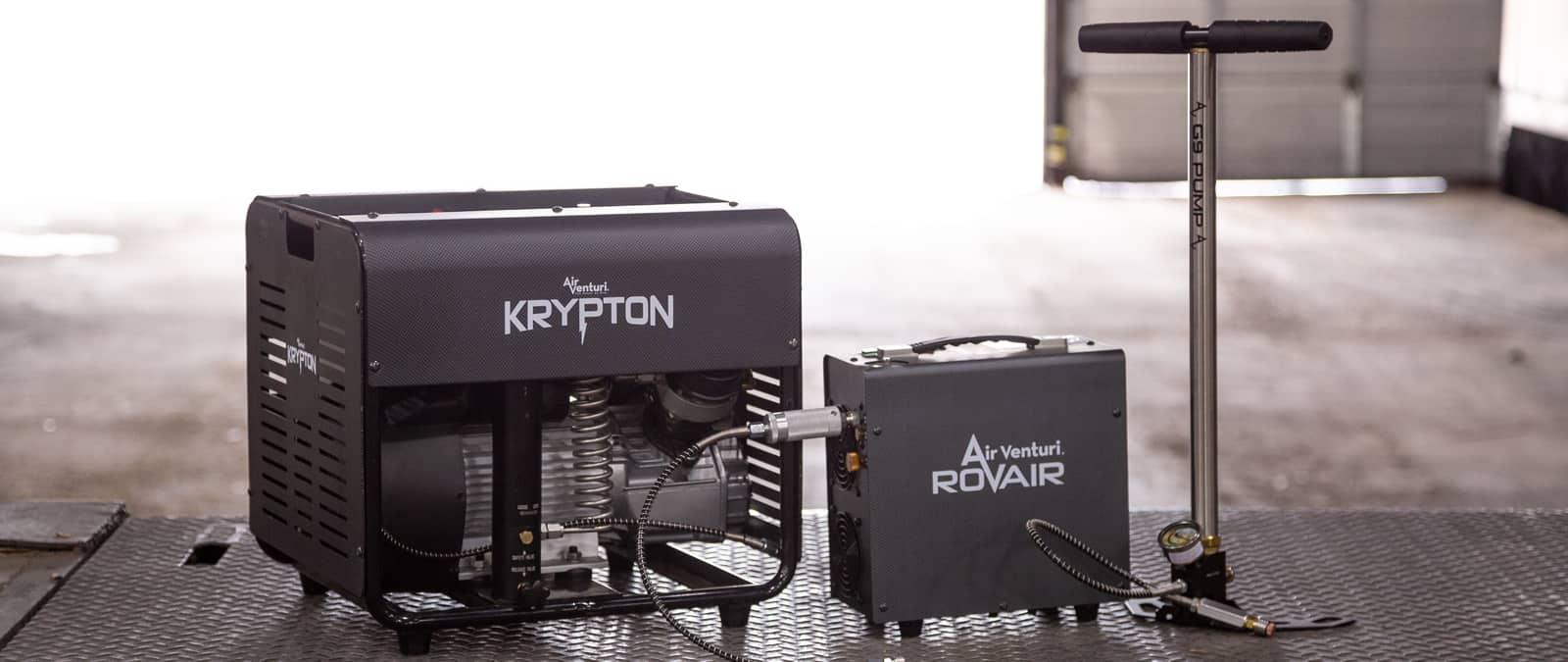
How to Buy a PCP Air Compressor
Any PCP airgun owner knows the way to keep their airgun shooting is to keep it filled with compressed air. The most common filling options are; a PCP hand pump, a PCP air compressor, and a bottle/tank. Of these options, the compressor is the fastest, easiest way to fill your airguns. But not all compressors are created equal, so it's important to understand the different features and benefits offered by each type before making your purchase.
Compressor Types
There are two main types of compressors for airguns:
PCP compressors are high-pressure air (HPA) compressors, which are not the same as a pneumatic air tool compressor that you might use with a nail gun. A tool air compressor often has a max fill that is less than 200 psi whereas a typical pre-charged pneumatic airgun requires at least 1000 psi for small calibers.
Benefits of a Compressor
PCP compressors are a valuable tool for PCP airguns owners. They make using PCPs more enjoyable. In the past, the only way to fill one was with a hand pump. And while that is still a very valid way of filling an airgun, it takes a lot of work and time. Using a PCP compressor eliminates the work completely and cuts the time down significantly.
What Size Compressor Do You Need
Different airguns require different amounts of air to function correctly. When picking the right size, consider these four factors:
- How much air will your gun require?
- How much pressure does it need?
- How often do you need to refill it?
- Where do you do your filling?
Air Requirements
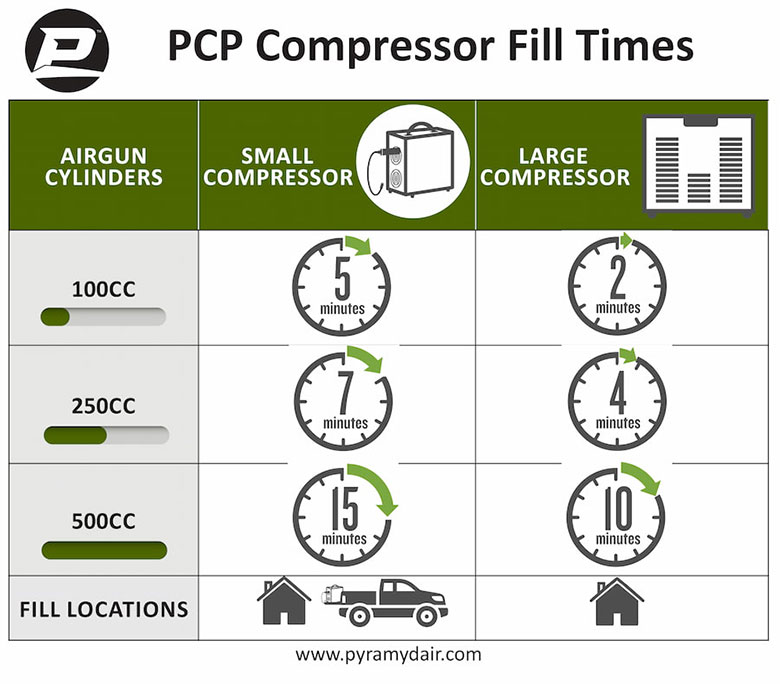
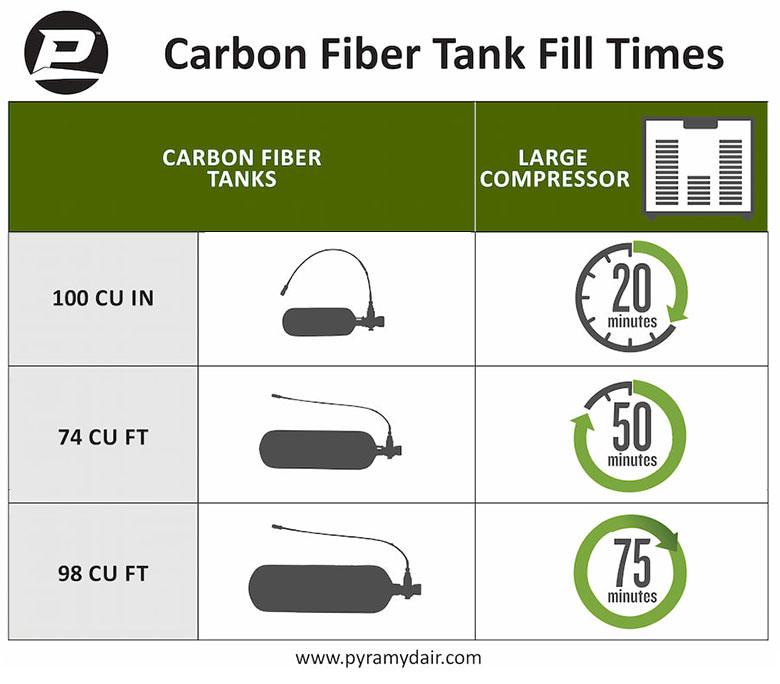
The size of the compressor you need depends on your air requirements. Air tanks under 300cc can be filled by a small compressor easily, while tanks between 300cc and 500cc will cause a small compressor to struggle, and may need to pause filling to cool down so it doesn't overheat. For tanks over 500cc, a large compressor is better.
Pressure Requirements
Airguns that have a fill requirement under 3500 psi can be filled with a hand pump or small compressor. Airguns that have a fill requirement of 4500 psi should be filled with a compressor.
Fill Timing
If you do a lot of shooting, you'll want to fill your gun often. Having a compressor can make this very convenient. The amount of time it takes to fill a tank is determined by the size of the tank as well as the pressure the tank requires. Generally, smaller tanks take a few minutes to fill, while larger tanks can take several hours, depending on the size of the compressor.
Fill Location
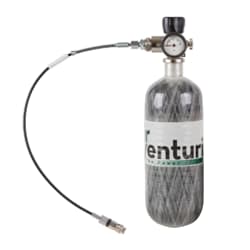
In the field you can get a quick top-up from a small portable compressor. But these compressors are only suitable for filling onboard gun tanks, not carbon fiber fill tanks.
If you only do your filling at home, portability isn't important and you could set up a permanent filling station in your home, making a large compressor a better choice. This would allow you to fill both guns and fill tanks as often as you need them.
In conclusion, if you have one or two guns with small onboard tanks that use less than 4500 psi, a small compressor should serve you well. But, if you have several guns that you shoot a lot, or tanks to fill, a large compressor would be better.
If you need help deciding which compressor is right for you, feel free to talk to one of our specialists. They can tell you the differences between each compressor and which one will best meet your needs.
What to Consider When Shopping for a PCP Air Compressor
Not all compressors are equal! Look beyond the price point when shopping at large retailers that sell low-priced units from overseas:
Risks of Low-Cost Alternatives
- No Output Gauges: On some models, you'll have to rely entirely on your rifle's on-board gauge to know when to turn off the unit.
- No Manual Shut-Off: Many low-end compressors don't have an auto-shutoff feature and will require constant monitoring while filling.
- Zero Moisture Filtration: Many units will pump condensation and/or oil directly into your air cylinder, potentially leading to corrosion and other long-term issues with your PCP.
- Metric Fittings: A lack of standard US-spec quick-disconnect dimensions will require you to buy additional adapters.
- No Support: All units need to be maintained, but when you pick up a low-end model that isn't based in the US, you may run into issues getting spare parts or technical support.
- Incomplete Kits: On many portable units, you may not find the parts needed for car battery operation in the field.
Essential Features to Look For
As airgun experts, we consider the following features to be essential in the PCP compressors we carry:- Adjustable Auto-Shutoff & Burst Discs: Dual-layer protection allows you to safely set precise fill pressures without hovering over the machine.
- Integrated Moisture Filters: Traps oil, particulate matter, and water before it enters your gun, ensuring nothing compromises the function of your PCP and protecting your investment.
- US Market Ready: Includes properly sized US Imperial fittings and clear English manuals for immediate, out-of-the-box deployment.
- Backed by Experts: Includes essential spare parts, optional digital interfaces, and reliable US-based warranty support to keep you shooting.
Premium Features for Demanding Airgunners
High-end units include all the base features plus:- Multi-Stage Filtration & Auto-Purge: Actively exhausts moisture during operation to deliver the molecularly dry air vital for high-end match barrels and regulators.
- Liquid-Cooling & Thermal Shutoff: Smart onboard electronics manage the extreme heat of compression, preventing heat-soaking and automatically powering down if limits are exceeded.
- Heavy-Duty Duty Cycles: Refillable lubrication allows extended continuous runtimes to easily top off large carbon fiber companion bottles.
- Over 4,500 PSI Capable: Generates massive output pressure for the most demanding big-bore hunting scenarios without skipping a beat.
Other Filling Options
Hand Pump vs Compressor
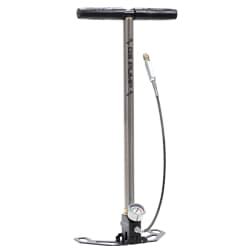
Each airgun has its own air requirements. Some use a few CCs, while others use 100s. Some guns are pressurized to 3000 psi while others need 4500 psi. And, depending on your airgun, it can take 500 to 1000 pumps to fill it with a hand pump whereas a compressor can fill it within minutes.
Hand Pump
Pros
- Budget-friendly - you can buy a hand pump for less than $250.
- No electricity is needed - it's human-powered.
- Portable - it's light enough and small enough to fit in a backpack so you can take it anywhere.
Cons
- Technique is imperative - you need to raise the handle to its maximum height and lower it completely or your strokes are greatly inefficient.
- Requires strength - a smaller person or someone with little strength will have a hard time depressing the handle to push the air from the pump to the gun. The resistance of the air is difficult to overcome.
Compressor
Pros
- Push button ease - just connect the port to the fill tube and turn the unit on. It does all the work.
- Quick fills - a compressor can fill an airgun in just a few minutes.
- Convenient - a compressor will fill your airguns while you take care of something else.
Cons
- Somewhat expensive - the investment in a compressor is more than other options.
So, while a hand pump is budget friendly and portable, it takes a lot of effort and a lot of time to fill your airguns. And if you have several airguns to fill, it could take up your whole day. A compressor can fill the same airguns in a fraction of the time, with no physical effort on your part, though it requires a bit more of an investment. If you need to save money and don't mind putting in the effort, you could use a hand pump. But if you want to save time and energy, you should consider a compressor.
How Do You Fill a PCP Airgun with a Compressor?
Ready to fill your PCP rifle or pistol? Here is a straightforward, step-by-step guide to doing it safely. Just remember to always check your compressor's manual before you get started.
1. Secure Your Connection First
Before turning your compressor on, verify that the bleeder valve on your compressor is closed tightly. Securely attach your female Foster quick-disconnect fitting or fill probe to the rifle's male port. A locked-in connection is your first line of safety. To check that your connectors are properly locked in, ensure the collar on your female QD is in the forward position. Then, give the female QD fitting a gentle pull against the male it's connected to to verify it's locked on.
2. Respect Maximum Pressure Limits
Most compressors have some type of automatic shut-off built in. This is often found right on the gauge or digital display of the compressor. Make sure that your auto shut-off is set to the correct fill pressure for your PCP airgun before you begin filling. It's also vital to monitor both the unit and the pressure gauge on your airgun while it's filling. In the event the auto shut-off fails, or if you find a discrepancy between the gauge on your rifle and your compressor, stop the unit right away so it does not overfill your airgun.
Overfilling will not yield higher FPE (Foot-Pounds of Energy) or extra shots. Instead, it causes "valve lock" - a state where the internal hammer cannot overcome the excessive pressure to open the valve, effectively rendering your rifle useless for your day in the woods. If you do overfill the gun, all is not lost. Many modern PCPs have degassing ports where you can release the pressure back to a normal level. If your PCP does not have a degassing screw or port, it's best to shoot the gun down to within the normal pressure range. Dry-firing is typically okay unless explicitly called out otherwise in your manual.
3. Bleed the Line Safely
Once you hit your target pressure, the compressor should stop thanks to the auto shut-off. After it stops, it's vital that you allow the unit's cooling system to continue to run. Before you even think about disconnecting the hose, you must open the bleeder valve. This exhausts the dangerous high-pressure air trapped in the hose. Attempting to force off a pressurized fitting is incredibly dangerous and can instantly damage your equipment.
4. Disconnect and Deploy
Once you hear the air safely purge from the line and the gauge on your compressor shows 0, detach the fitting. Your PCP is now perfectly topped off and ready to send pellets or slugs downrange.